

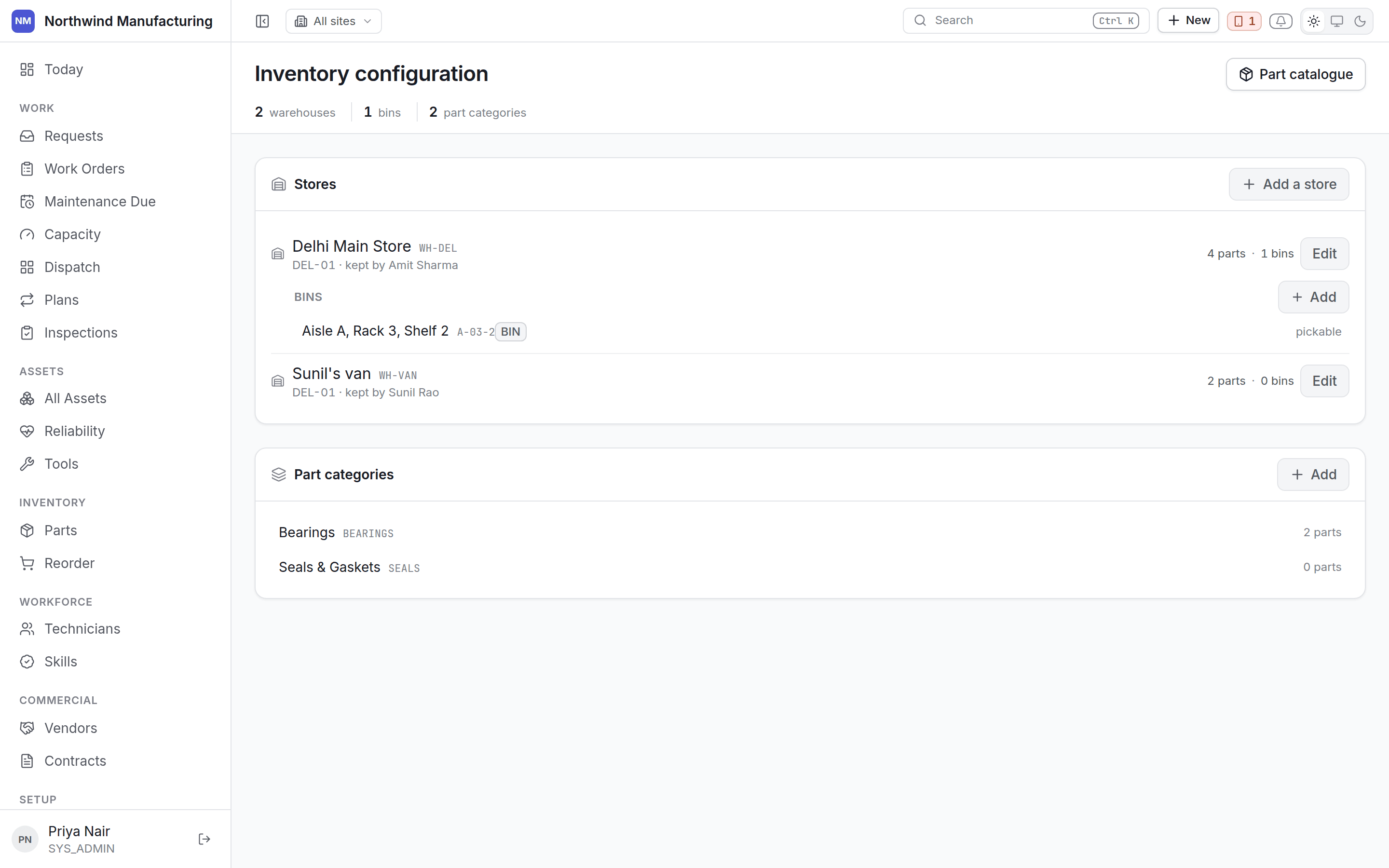
Stores and bins
A store is somewhere stock is held — a main store, a line-side cabinet, a van. Bins are locations inside it. Stores matter more than they look. Stock levels, reorder points and shortage warnings are all asked per store, because one store being empty is a shortage even when the total across the plant looks healthy. Each store belongs to a site, so a technician at one plant is not offered stock in another.Part categories
Group parts — bearings, seals, filters, fasteners, lubricants, electrical. Used for reporting and for finding things in a long catalogue.Reorder policy
What decides when a part appears on the reorder list.
Coverage period is the one worth thinking about. Set it shorter than your longest lead time and the
list will keep telling you about shortages too late to prevent.
Bills of materials
A BOM version records which parts fit which asset, at a point in time. Versioning matters because equipment gets modified — a pump refitted with a different seal has a new BOM, and last year’s work orders should still make sense against the old one. BOMs are what make:- “Which filter does P-102 take” answerable at the store counter.
- Planned demand forecastable — a plan consuming a BOM part on twenty assets is twenty parts.
- A part’s Used on tab meaningful.