

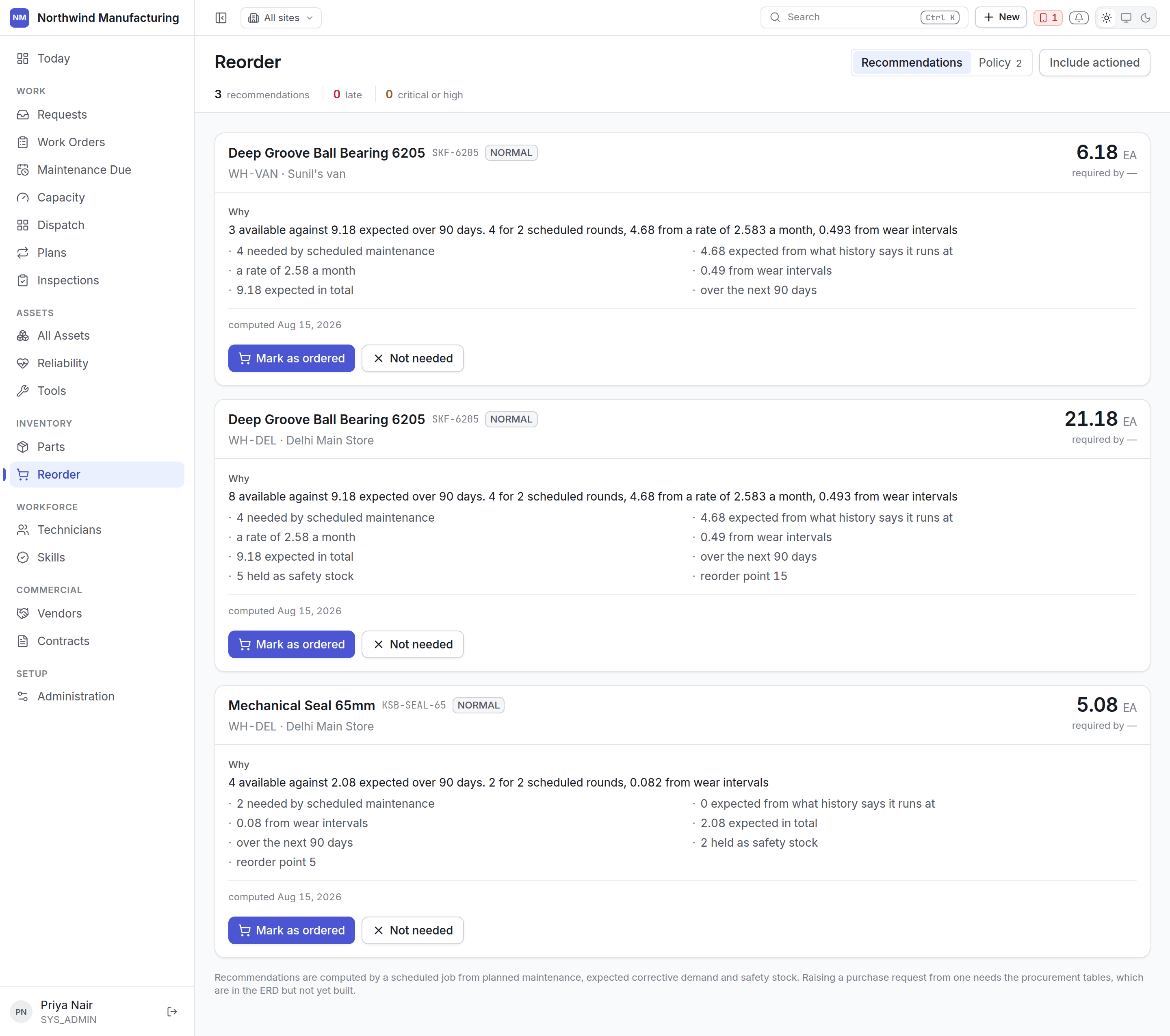
What a recommendation is
Not just “stock is low”. A recommendation weighs:
Planned demand is the part people miss. A part with three on the shelf and a plan that consumes four
next month is short now, even though nothing has gone below its reorder point yet.
Reading the reason
Every recommendation shows the argument behind it — the rate it is consuming at, how that rate was measured, what is planned, and when stock runs out at that rate. The reason travels with the recommendation, so somebody approving a purchase can see why rather than trusting a number. Demand rates carry a quality mark. A part with two years of steady history gives a rate you can plan on; one with three movements in eighteen months gives a guess, and says so.Acting on it
- Raise a purchase request for the recommended quantity.
- Transfer from another store that has spare, rather than buying.
- Substitute — the alternatives on the part may already be in stock.
- Dismiss, with a reason, where the recommendation is wrong. It stays visible rather than vanishing.