

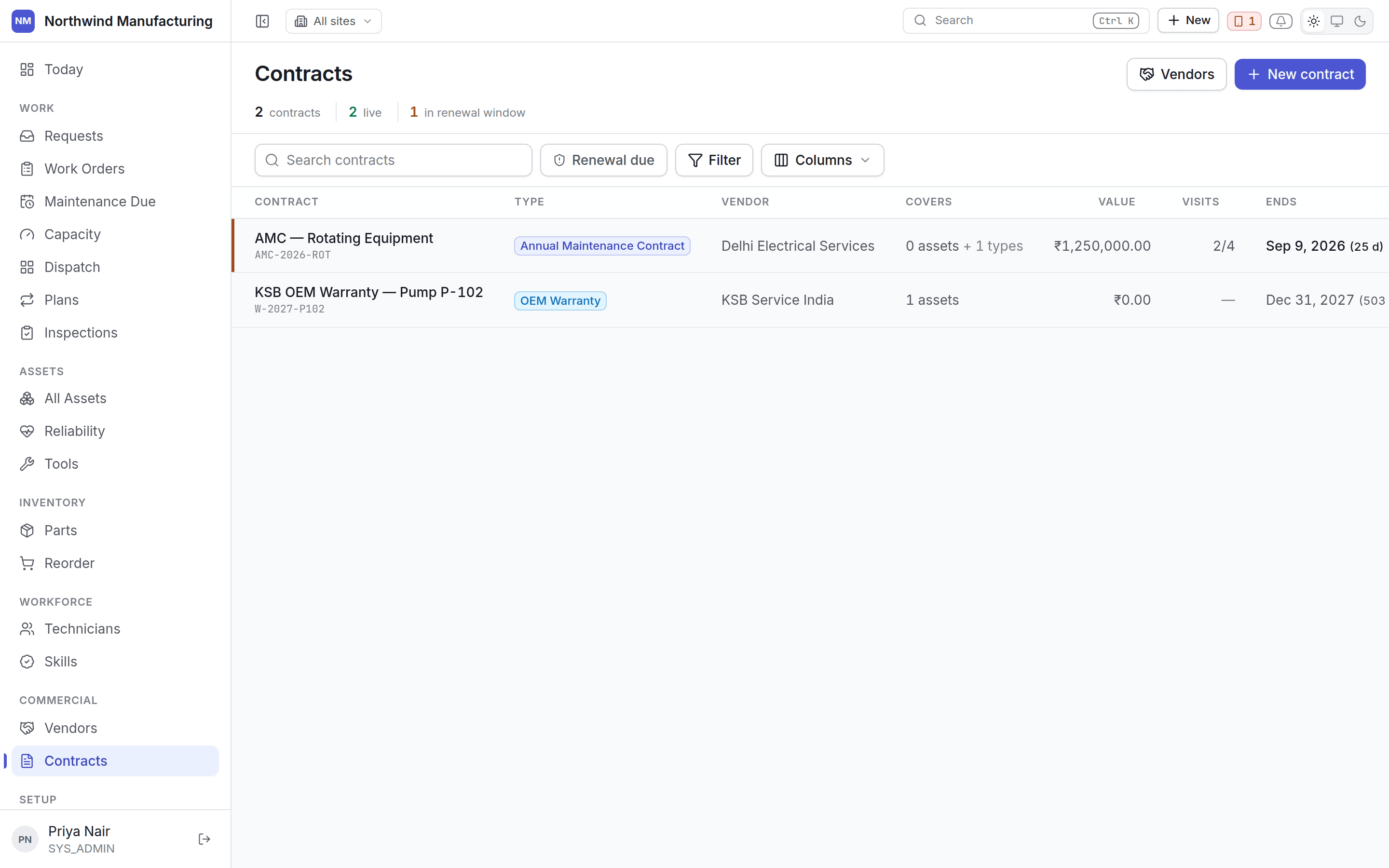
Kinds of contract
The list is configurable under commercial settings.
Coverage leads
The question a plant asks a contract is not “what does it say” — it is “is this repair on their bill”. So a contract opens with a coverage checklist rather than a summary: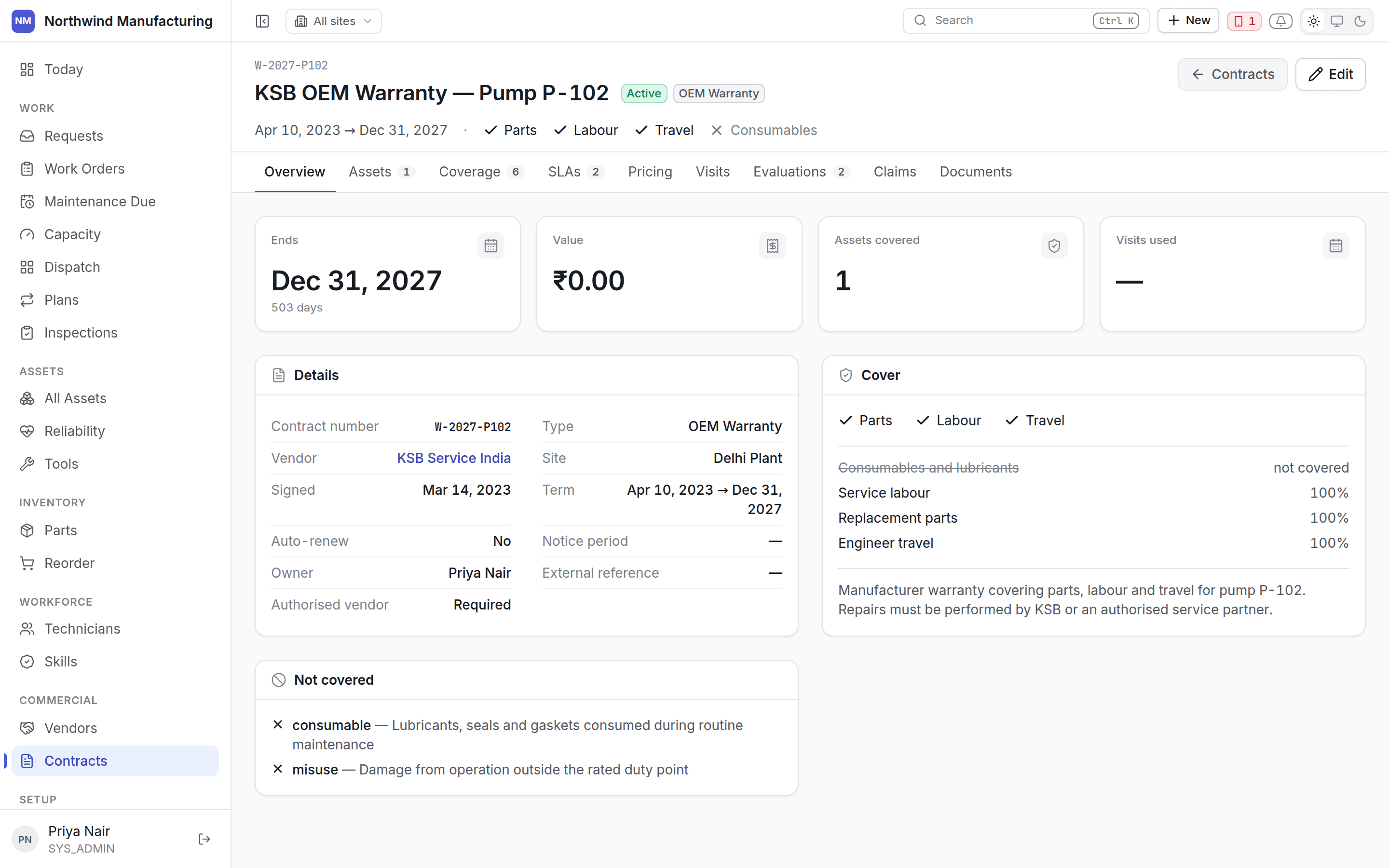
Exclusions sit beside entitlements
Not in a tab of their own. Exclusions are evaluated first, and reading what a contract covers apart from what it excludes is how a plant discovers the gap at claim time.Tabs
Overview
Overview
Number, vendor, kind, the assets or sites covered, and the period it runs for.
Coverage
Coverage
What is covered and what is excluded — parts, labour, travel, consumables, and the categories of
work the agreement extends to. Editable, because a contract arrives as a PDF and somebody has to
type what it says.
Terms
Terms
Notice periods, renewal terms, penalties, and payment terms.
Service levels
Service levels
What the vendor promised — response and resolution times, by priority. These are what their
performance is measured against.
Pricing
Pricing
What the contract costs and how it is billed.
Visits
Visits
Scheduled visits the agreement includes, and whether they happened.
Entitlement evaluations
Entitlement evaluations
Every decision the engine has made against this contract, with the evidence it used.
Read-only and append-only — an evaluation is a record of what was decided at the time.
Claims
Claims
Claims raised against this contract. Read-only here — a claim is raised from the covered work
order, where the evidence is.
Documents
Documents
The contract as signed. Everything else on the screen is somebody’s transcription of it.