

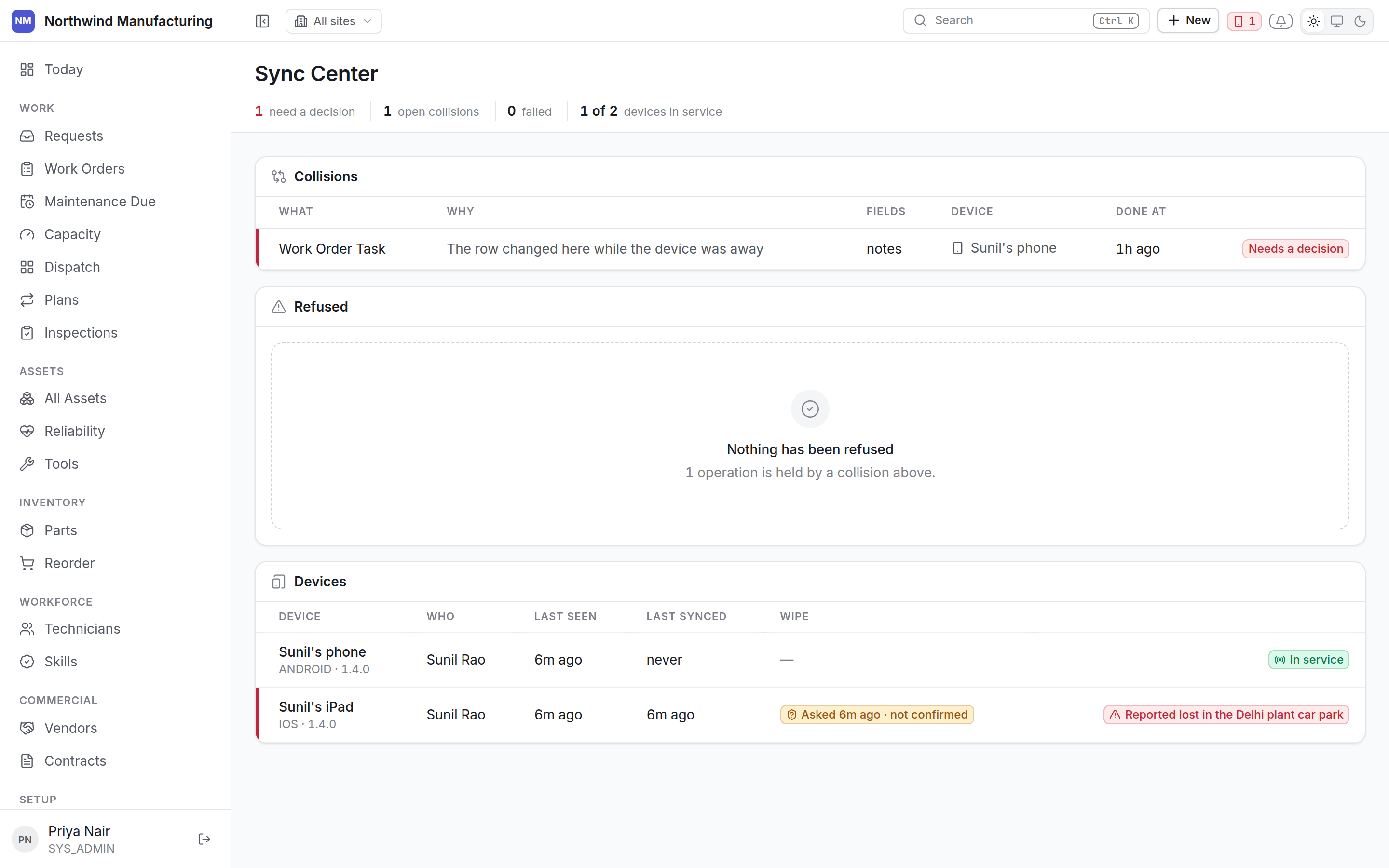
Three questions, in order
1. What needs a decision?
Collisions, first and largest, because they are the only thing here that will not resolve itself. A pending operation goes when there is signal. A failed one may go on the next attempt. A collision waits for a person indefinitely — so filing it under a device inventory would be letting it wait.2. What went wrong?
Failed operations, with the server’s own error code and sentence.3. What is out there?
The handsets — when each last spoke to the server, which are revoked and why.Resolving a collision
The handset says “Gauge itself is out — 4.1 bar reading is the instrument.” The server says “Vendor reports 4.1 bar is within tolerance for this model.”Both are somebody’s judgement. The system will not choose between them, and it should not. You resolve it by choosing:
Whatever you choose is recorded — who decided, when, and what was discarded. A resolution is a
decision with an author, not a silent overwrite.
Automatic resolutions
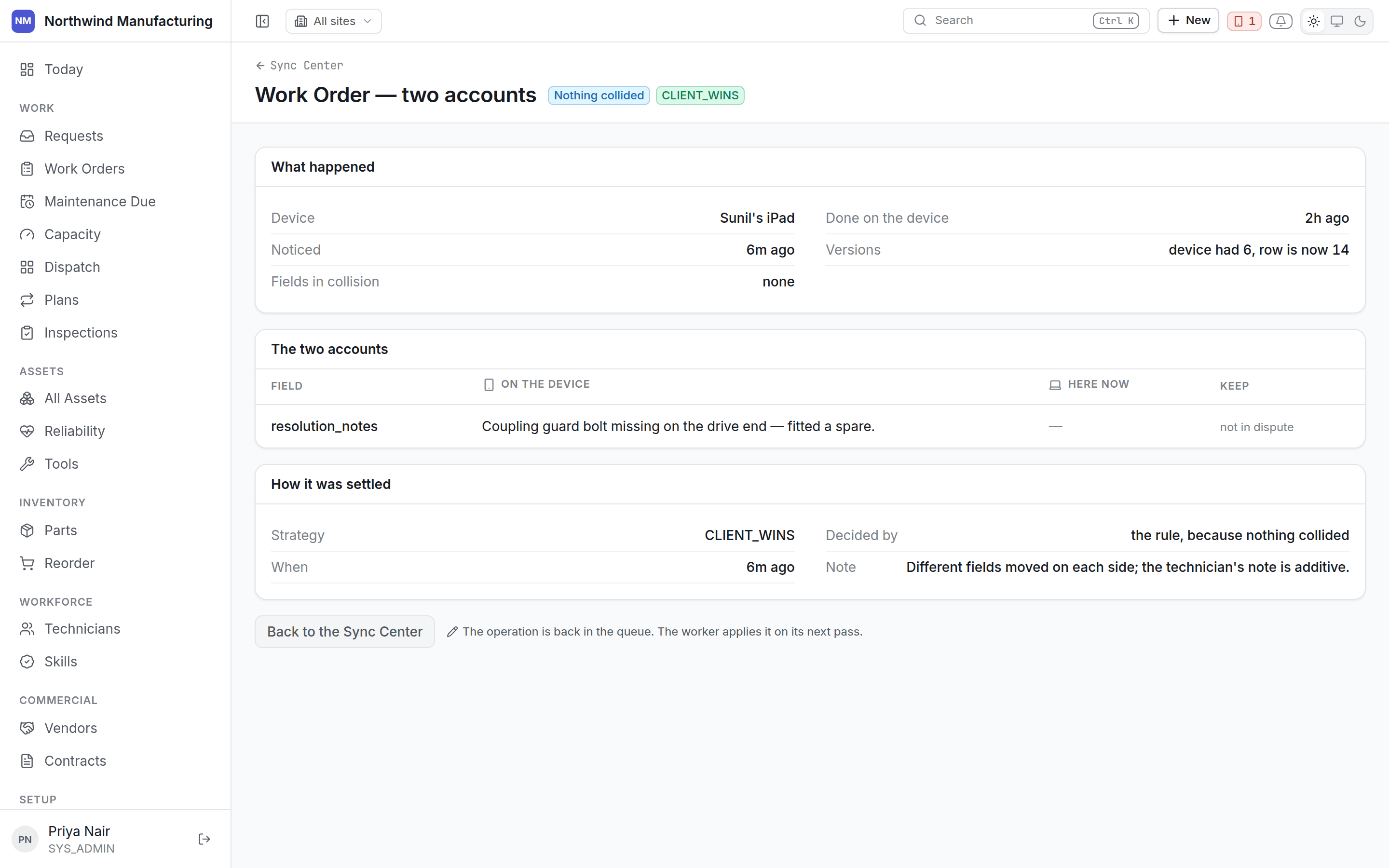
Where two changes did not actually touch the same fields, the system resolves it by rule and says so — including that it was automatic and which rule applied. These appear in the list as resolved rather than being hidden, so the count of collisions is honest.Devices
Every enrolled handset: who it belongs to, when it last synced, how far behind it is, and whether it is still usable.Revoking a device
Revoking a device
For a lost or stolen handset. The device can no longer sync and its sessions end immediately.Work already queued on it is kept, not discarded — those operations name the person who did
them, and losing a phone should not lose a shift’s records.
Requesting a wipe
Requesting a wipe
Marks the device to erase its local database next time it connects. Use with revocation for a
handset that has left the site.
A device that has not synced
A device that has not synced
A handset several days behind is usually a handset in a pocket, not a fault. One that is far
behind and belongs to somebody on shift is worth a phone call.