

Why they matter
Two reasons:- Meter-based maintenance. Every 2,000 run hours only works if somebody is recording run hours. See triggers.
- Condition. A vibration reading climbing over three months is the machine telling you something before it stops.
Meter types
Configure the types your plant uses under asset settings — the name, the unit, and whether it only ever goes up. A cumulative meter (run hours, cycles) never decreases; a reading below the last one is a mistake or a replaced counter, and the system will say so. A point-in-time meter (temperature, pressure) goes up and down freely.Recording a reading
On the handset
On the handset
A technician records the reading at the machine, in the field app, as part of the job. This is
the normal path and the most reliable, because the person is standing in front of the counter.Readings taken offline queue and arrive when signal returns.
On the asset
On the asset
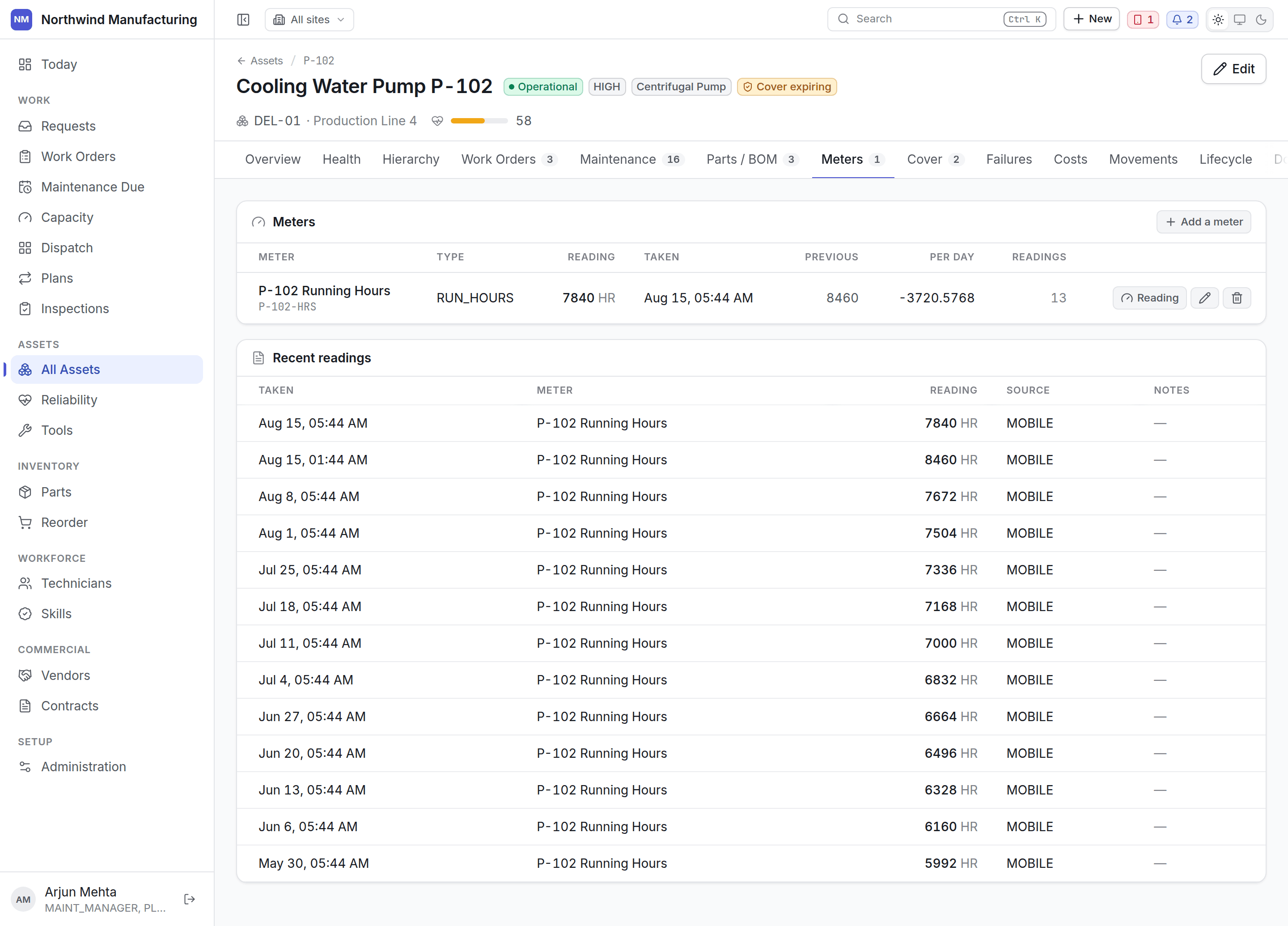
Open the asset, go to Meters, and add a reading. Useful for a catch-up after a manual round.
From condition monitoring
From condition monitoring
A sensor bound to this meter writes its readings through automatically, which is what turns a
live measurement into maintenance that comes due on its own. See sensors.