

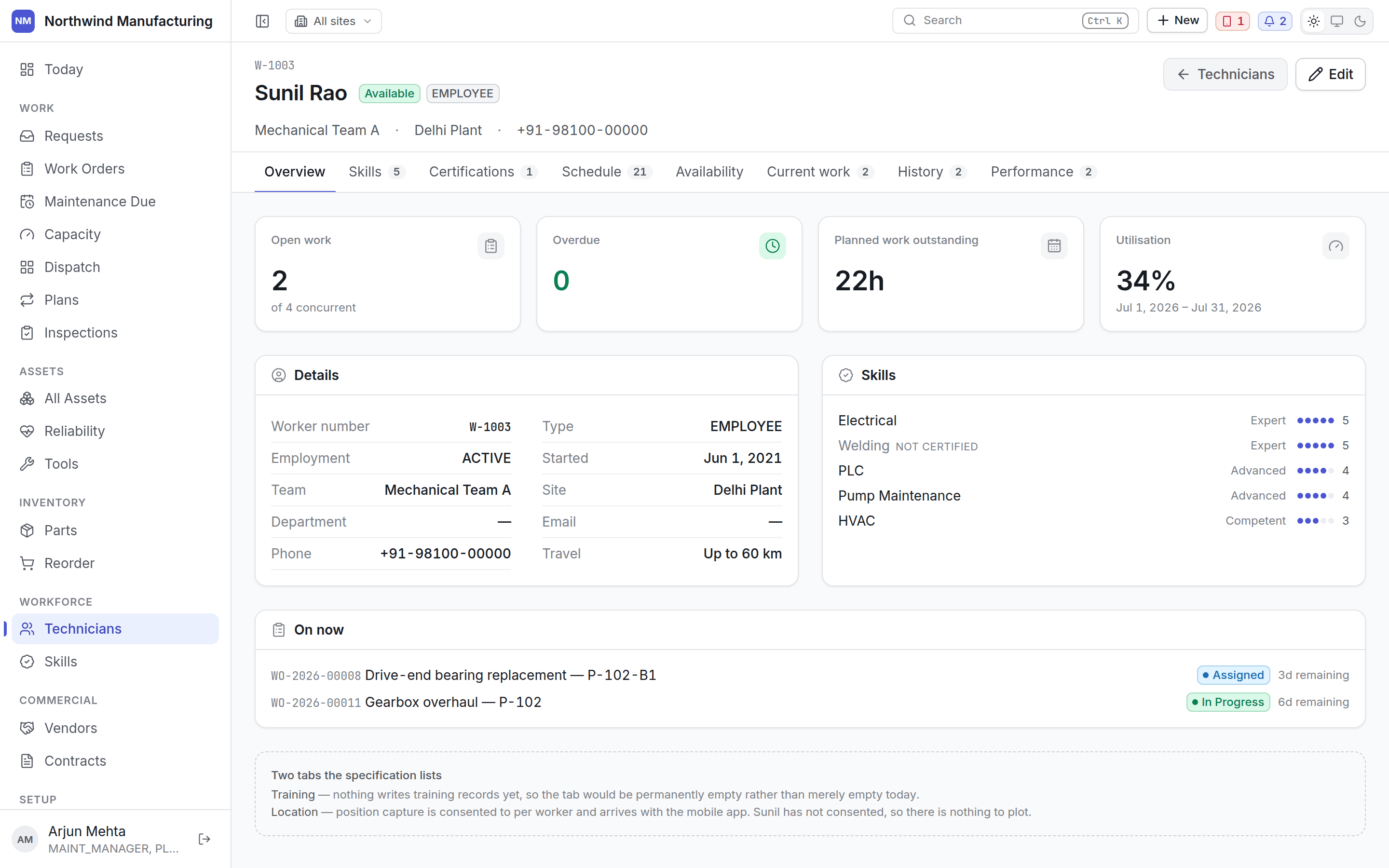
Tabs
Overview
Overview
Worker number, name, type, team, site, contact details, and the rate that applies to their
booked hours.
Skills
Skills
What this person can do, and to what level.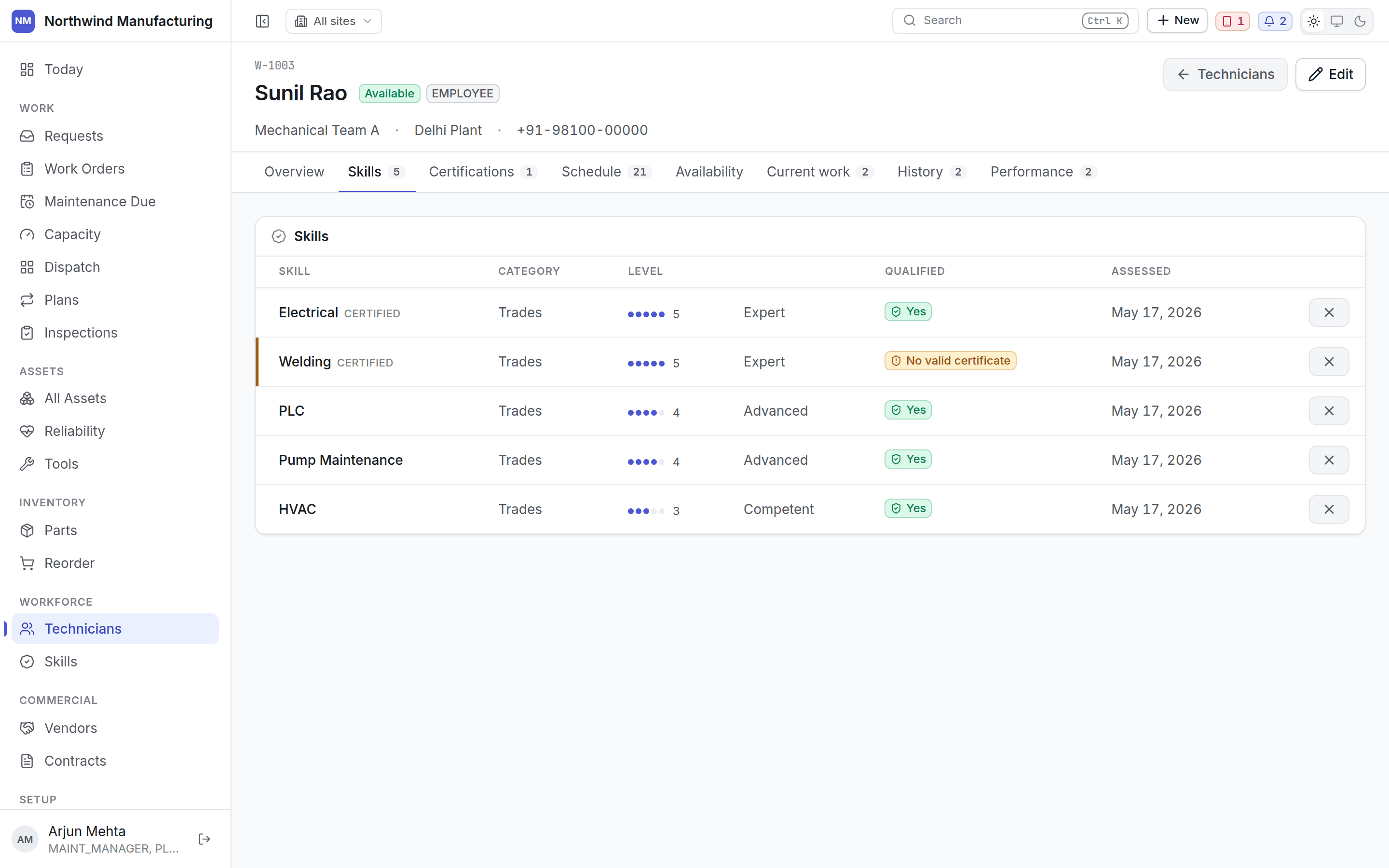
Certifications
Certifications
Formal tickets with expiry dates — pressure systems, electrical, confined space, working at
height.A certification is different from a skill: skills degrade quietly, certifications expire on a
date, and an expired one stops an assignment rather than warning about it. Expiry raises a
notification ahead of time.
Schedule
Schedule
When this person is in — shifts and working windows.
Availability
Availability
When they are not — leave, absence, and anything else that removes them from the roster.Schedule and Availability read the same underlying roster and are separate tabs because they
answer opposite questions. This is the one that carries the write: booking leave is done here.
Current work
Current work
What is on them now — assigned, accepted, in progress. This is what the dispatch board’s load
bar counts.
History
History
Everything they have completed, with dates and durations.
Performance
Performance
Computed from what they actually did: jobs completed, average time against estimate, first-time
fix rate, and service levels met.
Performance is read-only, because it is derived rather than entered. Read it as a picture of
the work that came their way as much as of the person — somebody who gets the hard jobs will
show slower times.